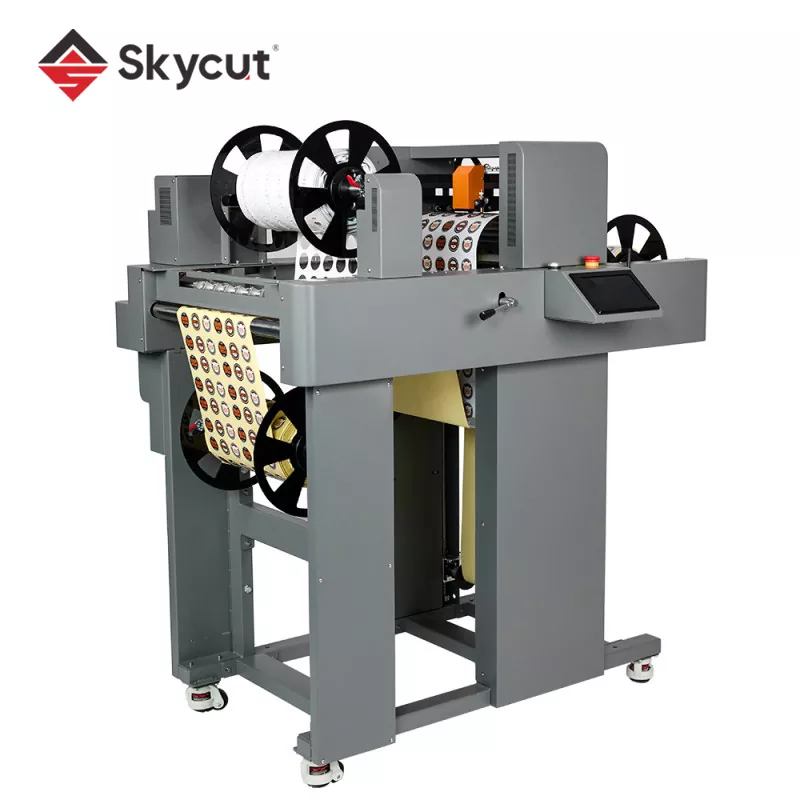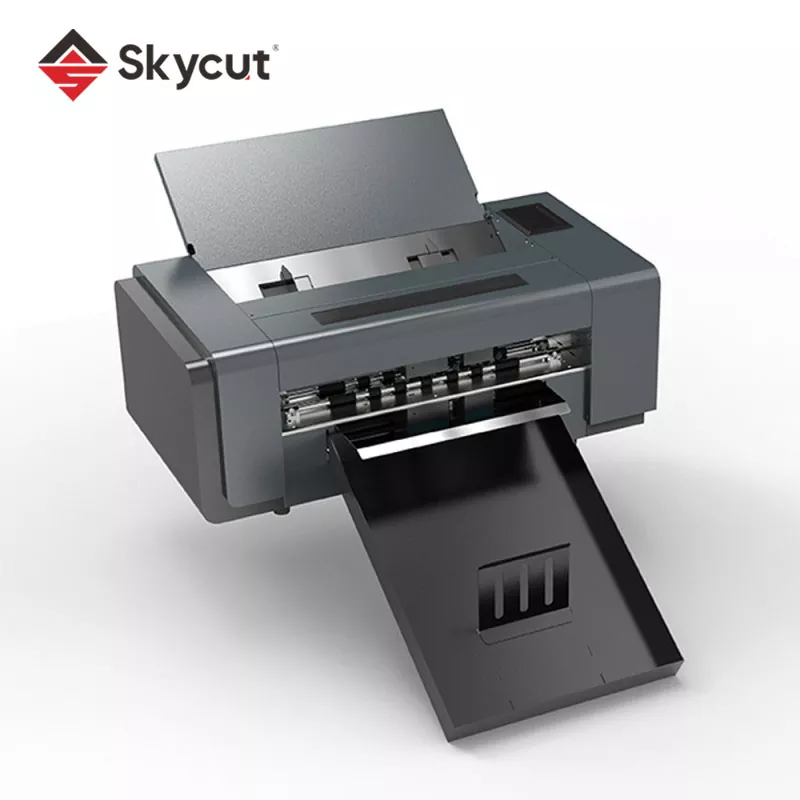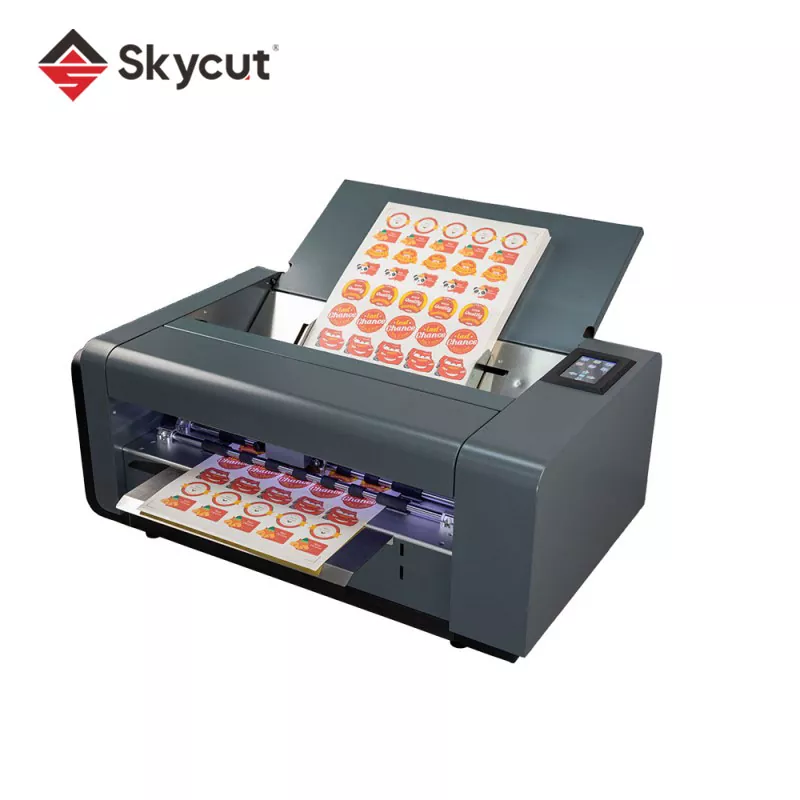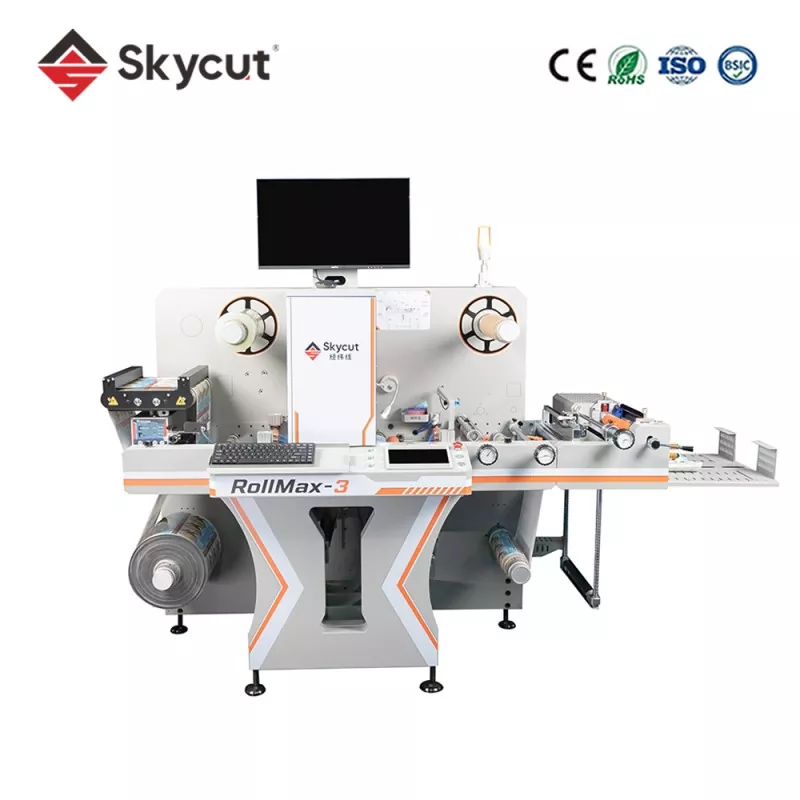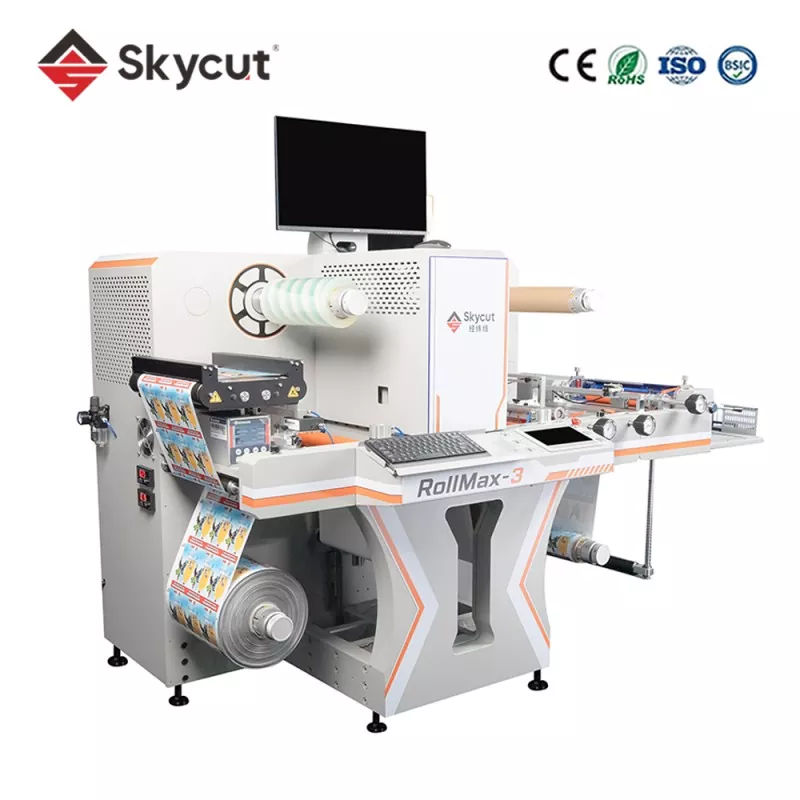

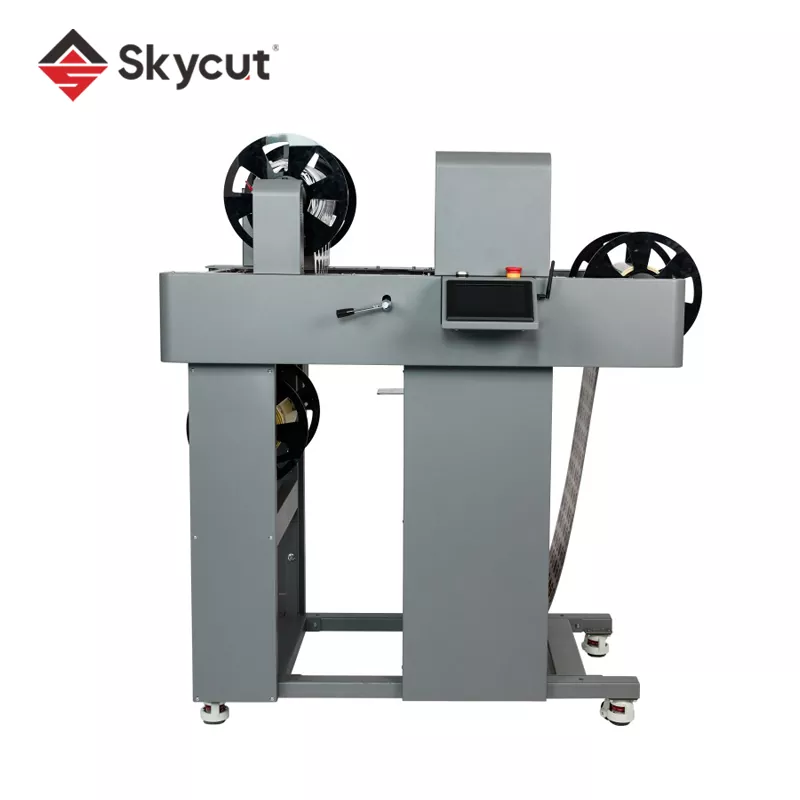


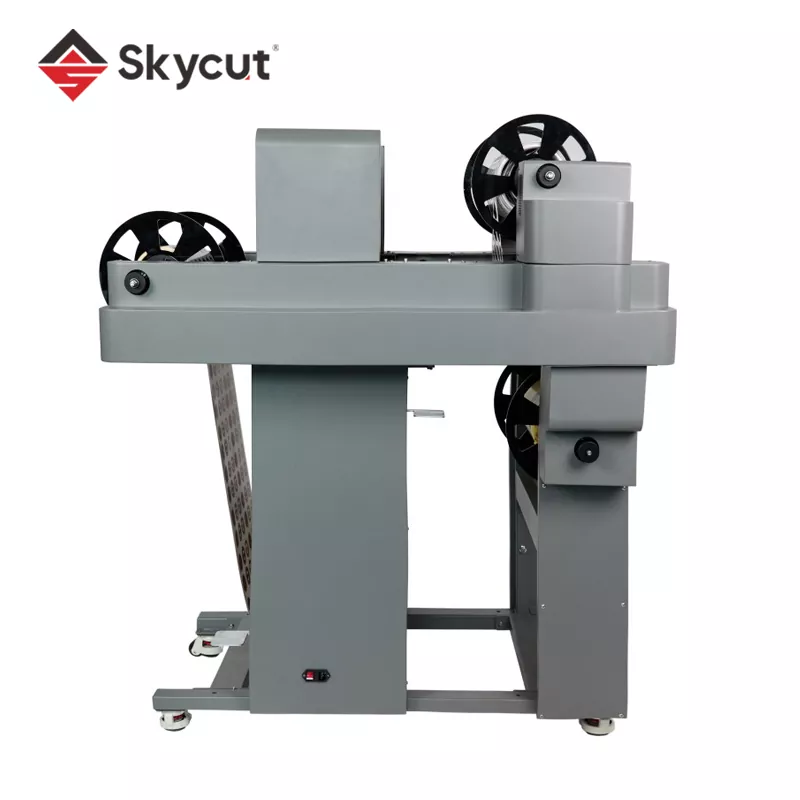

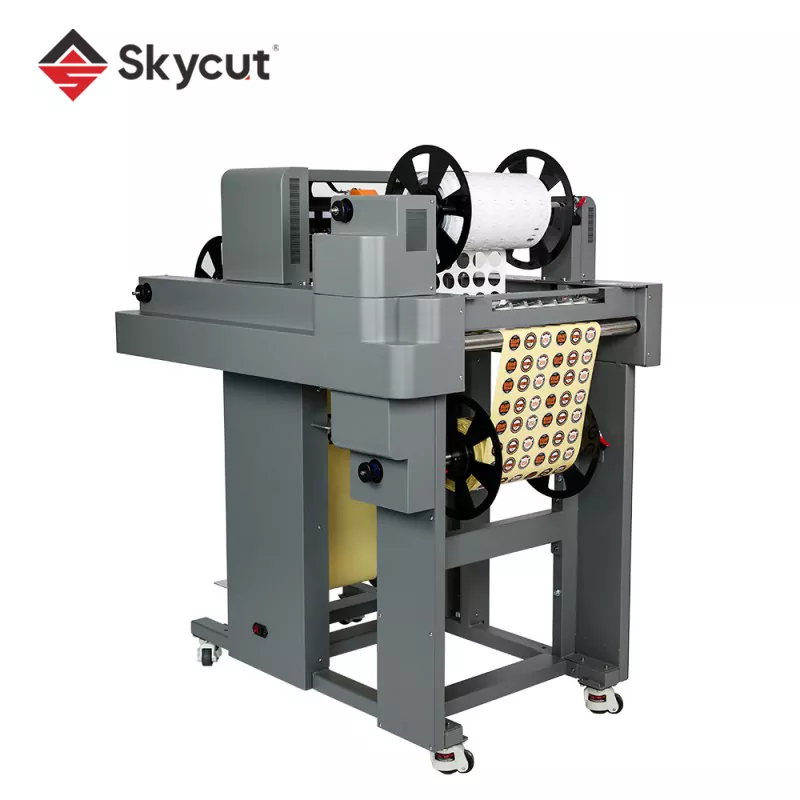

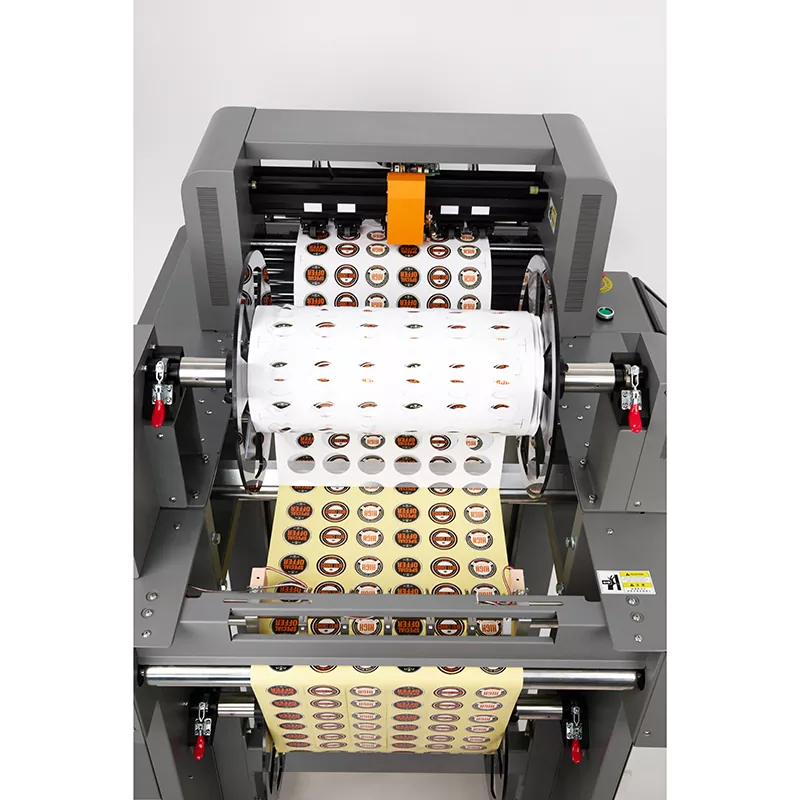


· Complete Roll-to-Roll Processing – Automatic feeding, die cutting, waste stripping, slitting, and rewinding in one workflow.
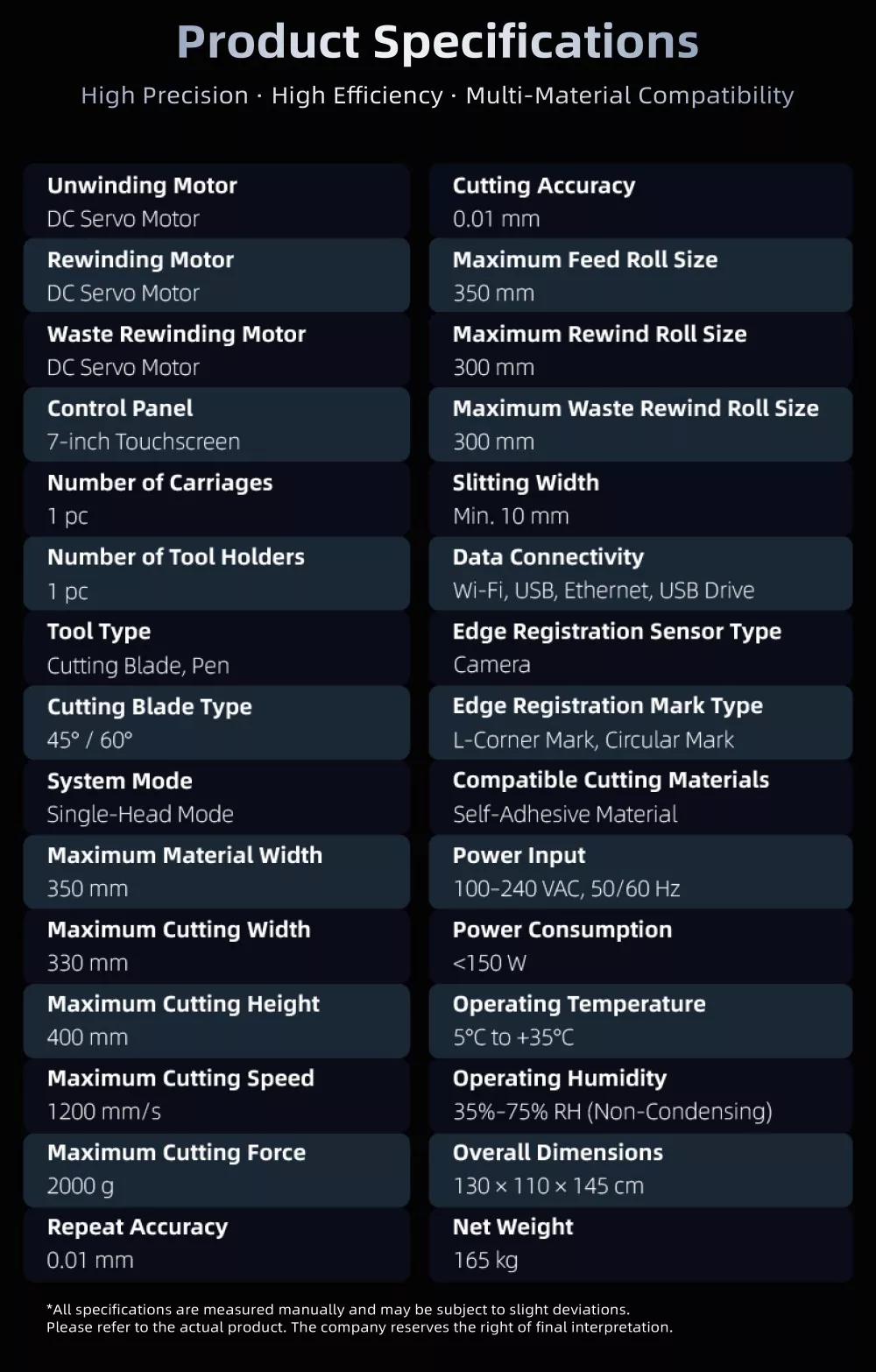
· 350mm Roll Material Width – Designed for roll-fed self-adhesive labels and stickers.
· Full & Half Cutting – Supports through-cutting and kiss-cutting for flexible label production.
· Automatic Waste Stripping – Removes waste after cutting to reduce manual handling.
· Automatic Feeding & Rewinding – Enables smooth and continuous roll-to-roll production.
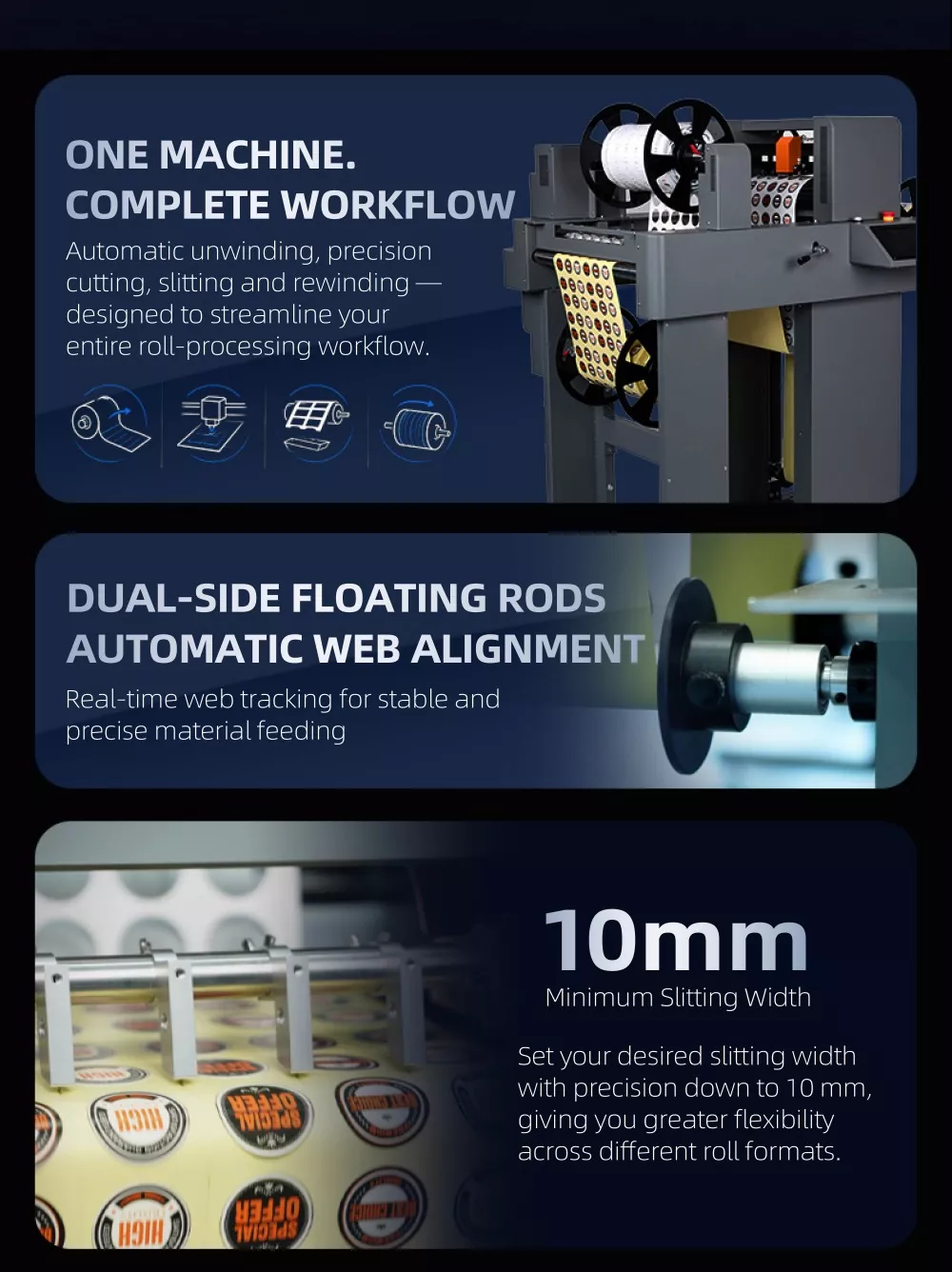
· Automatic Edge Alignment – Maintains stable and accurate material feeding during operation.
· Flexible Slitting – Minimum slitting width of 10mm for small-batch and multi-SKU orders.
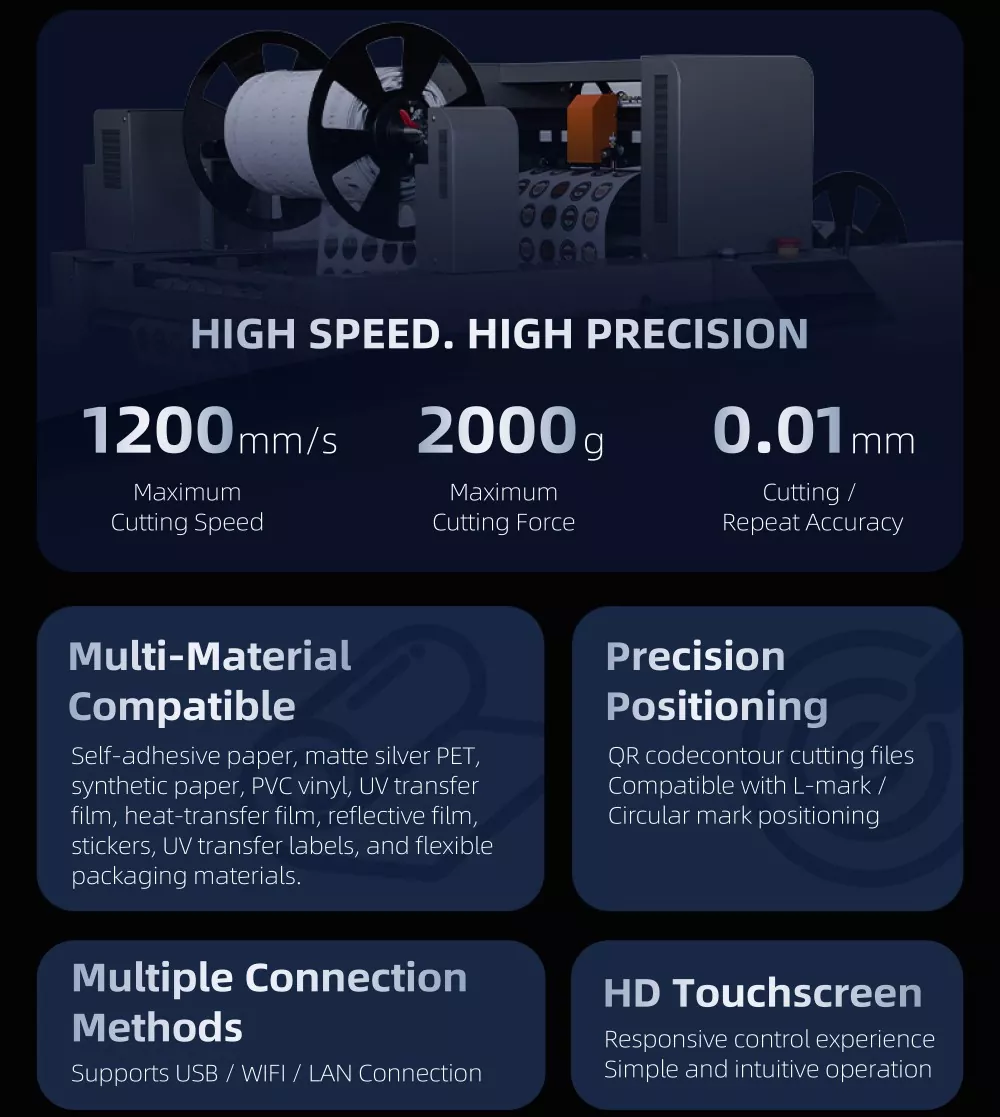
· Fast & Precise Cutting – Up to 1200mm/s cutting speed, 2000g cutting force, and 0.01mm repeatability.
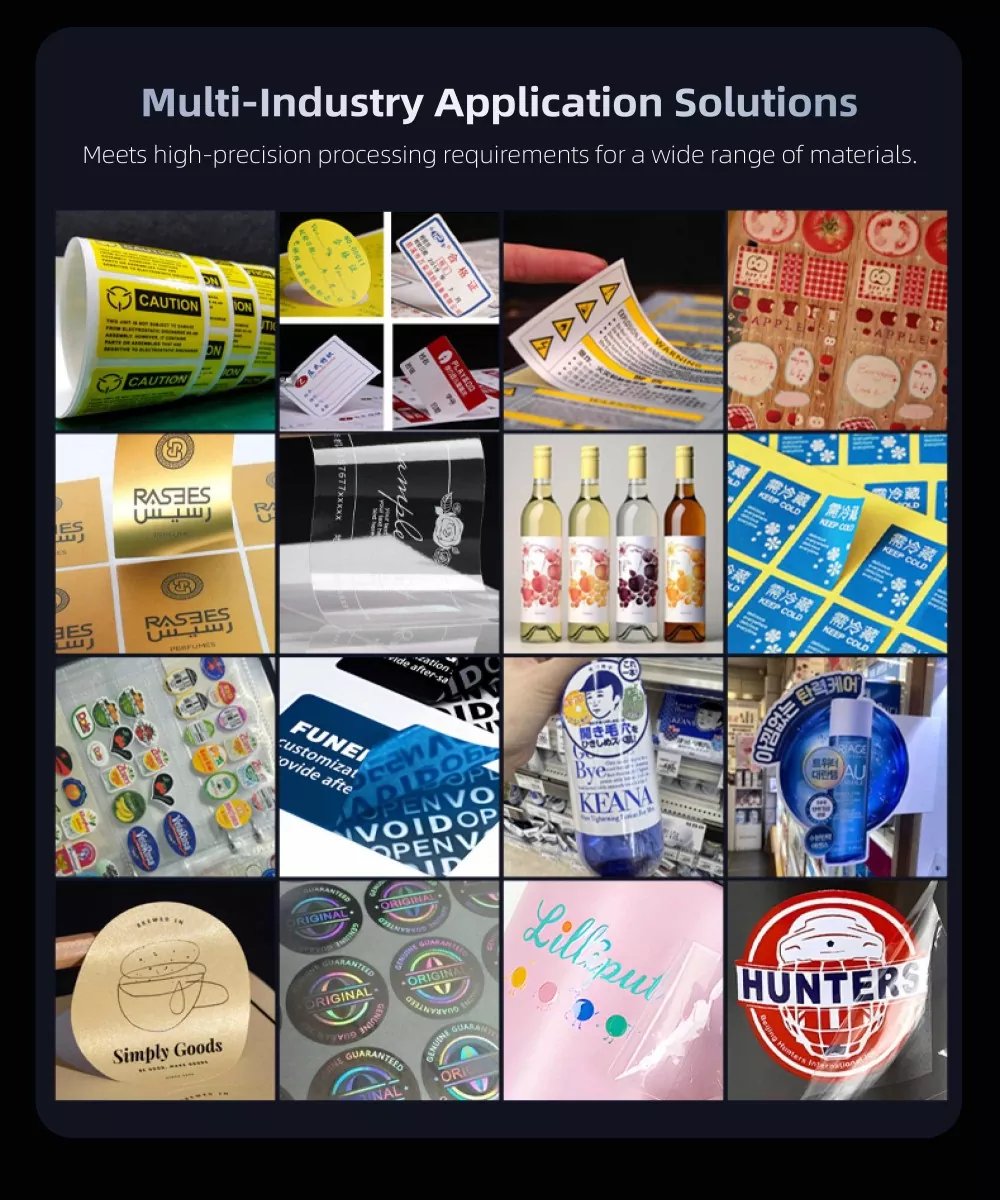
Roll MAX is specially designed for roll-to-roll die cutting of self-adhesive labels and stickers, including product labels, barcode labels, packaging labels, promotional stickers, and customized label orders.Roll To Roll Label Die Cutting Machine is ideal for printing companies and label manufacturers handling small-batch, multi-SKU, and on-demand production.
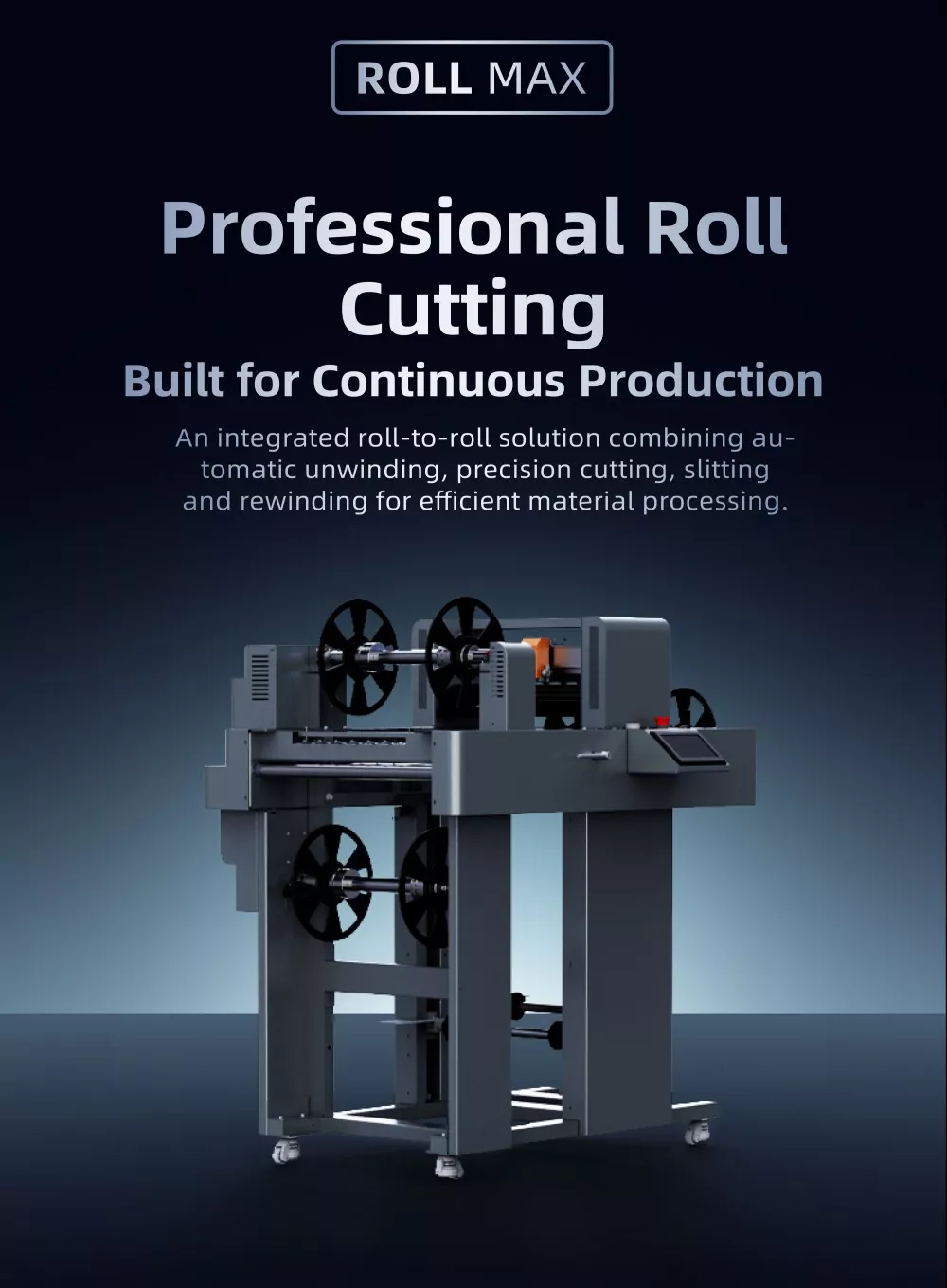
A: It is designed for roll-to-roll die cutting of self-adhesive labels and stickers. It handles product labels, barcode labels, packaging labels, promotional stickers and customized label orders, making it suitable for printing companies and label manufacturers working on small-batch, multi-SKU and on-demand production.
A: It covers automatic feeding, die cutting, waste stripping, slitting and rewinding in one continuous workflow. Material enters as a roll and exits as finished, separated labels. This reduces manual handling between stages, shortens production time and improves consistency across the entire label production process.
A: Full cutting cuts through the label and the backing liner, used when labels need to be completely separated. Half cutting, also called kiss-cutting, cuts only through the label layer while leaving the backing intact. Kiss-cutting is the standard method for self-adhesive labels that are later peeled by the end user.
A: After die cutting, excess material around the label shapes must be removed. Automatic waste stripping handles this step within the machine instead of requiring manual peeling. This reduces labor time, lowers the risk of damaging finished labels and keeps the production line running continuously.
A: Automatic edge alignment keeps the roll material tracking correctly as it moves through the machine. This maintains stable and accurate feeding, preventing the material from drifting sideways. Consistent alignment is essential for accurate die cutting and slitting across long roll-fed production runs.
A: A 10mm minimum slitting width allows the machine to produce narrow labels and small-format strips. This is valuable for small-batch and multi-SKU orders, where a single roll may need to be slit into several different label widths to serve multiple products or customers in one production run.
A: 1200mm/s speed supports efficient throughput. 2000g cutting force handles tougher label materials and thicker facestock. 0.01mm repeatability ensures each label is cut in the same position across the roll. Together they deliver fast production without sacrificing consistency.
A: It is ideal for printing companies and label manufacturers handling small-batch, multi-SKU and on-demand production. Businesses producing product labels, barcode labels, packaging labels and promotional stickers benefit most, particularly where short runs and frequent design changes make traditional die cutting less practical.
Address
Building A, No.235 Qingshul Road, Wulian Community, Longgang District, Shenzhen,China
Tel